

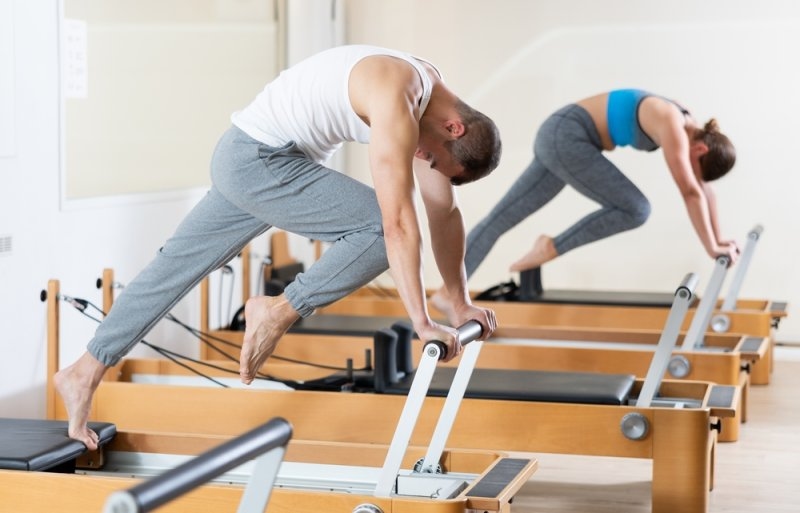
Pilates is often marketed around flexibility, posture, and gentle movement. That makes some men assume it is mainly for stretching. Not quite. A well-built Pilates for men routine can challenge the abs, hips, back, shoulders, and legs while improving how those muscles work together. The movements are controlled, but that does not mean easy.
Core tension stays active throughout many exercises. Over time, this can help with lifting, running, sports, and everyday movement. The real value is control. In this blog, we’ll look at how Pilates for men supports core strength, flexibility, mobility, and overall physical performance.
The core is more than visible abdominal muscles. It contains the deeper muscles around the abdomen, pelvis, lower back, and the hips, stabilizing the body. Pilates for men gives a lot of emphasis to this relationship.
Rather than a hurry to make the reps, hold these positions, control the transition, and maintain a stable trunk while the limbs move. That creates a different kind of challenge.
One of the biggest Pilates benefits is improved core stability. During many movements, the abdominal muscles have to resist unwanted movement rather than simply crunching forward. This teaches the body to brace, control rotation, and maintain alignment.
For men who lift weights, play sports, or spend long hours sitting, that control can be useful. A stronger core gives the rest of the body a steadier base.
Pilates for strength does not depend on maximum weight. Resistance comes from body position, leverage, springs, bands, and slow, controlled movement.
That makes Pilates for men useful alongside traditional gym training. A man who already squats or deadlifts may use Pilates to train smaller stabilizing muscles that heavy compound lifts do not always challenge in the same way.
Must Read: Build Strength with an Effective Gym Workout Routine for Men
Strength without mobility can become limiting. Tight hips, hamstrings, shoulders, and your lower back can really mess with how you move. Pilates for men focuses on muscle activity, not holding a stretch, but on flexibility.
This produces a more controlled range of motion.
Many Pilates exercises involve hip extension, rotation, or controlled leg movement. These can help men who sit frequently or feel stiff after strength training.
For example, leg circles require the hip to move while the pelvis stays relatively stable. The movement looks simple. Keeping it controlled is harder. That is the point.
Better flexibility is only one of the Pilates benefits. Movement awareness matters too. You begin noticing whether your pelvis shifts, whether your shoulders tense up, or whether one side moves differently from the other.
That awareness can improve exercise technique outside Pilates. Pilates for men is therefore less about becoming extremely flexible and more about moving with fewer unnecessary compensations.
A useful Pilates workout should match your current ability. Beginners do not need advanced reformer sequences on day one. In fact, starting too hard can make technique sloppy.
Pilates for beginners should focus on control, breathing, alignment, and basic core engagement.
Pelvic tilts, bridges, dead bugs, toe taps, bird dogs, and controlled leg movements can all be part of a Pilates for beginners session. These exercises teach basic trunk stability without requiring complicated equipment.
Perform each movement slowly. If the lower back starts taking over, reduce the range or stop. That is better training, not less training.
Once basic Pilates exercises feel comfortable, men can progress to movements such as single-leg stretches, roll-downs, side kicks, swimming, plank variations, and controlled leg lifts.
These movements combine strength and coordination. A good Pilates workout should leave you feeling worked without making every muscle feel destroyed. That distinction matters.
Don't Miss: Jump Rope Workouts That Build Stamina And Skills Fast
Pilates for strength can complement resistance training because it emphasizes stability, unilateral control, and sustained muscle tension. It is not a replacement for progressive weight training when maximum strength is the goal.
But it fills a useful gap.
The Pilates benefits can extend into activities where balance, trunk control, and mobility matter. Golfers, runners, cyclists, swimmers, and field-sport athletes may all benefit from better body awareness.
A runner, for example, needs the pelvis to remain controlled while each leg moves. Pilates trains a similar idea through slower, more deliberate exercises.
| Training Approach | Main Focus | Best Use |
|---|---|---|
| Pilates workout | Control, stability, mobility | Core and movement quality |
| Weight training | Progressive resistance | Muscle and maximal strength |
| Cardio training | Heart and endurance | Aerobic fitness |
| Mobility work | Range of motion | Flexibility and recovery |
Using Pilates for men alongside these methods can create a more complete routine. You do not need to choose one system and abandon everything else.
Another useful group of Pilates benefits relates to posture and body awareness. Hours at a desk can encourage rounded shoulders, stiff hips, and poor movement habits.
Pilates for men does not magically fix posture. It trains the muscles and awareness that can support better positioning.
Many Pilates exercises ask you to notice spinal position, breathing, pelvic alignment, and shoulder placement at the same time. That level of attention can feel unfamiliar.
Over several sessions, the movements become less deliberate. Better control starts becoming automatic.
That is one of the quieter Pilates benefits.
Starting Pilates for men does not require an expensive studio membership. A mat, comfortable clothing, and enough floor space can be enough for many beginner sessions.
Start with two or three sessions per week. Keep sessions manageable. Learn the movement before adding difficulty.
For Pilates for beginners, quality should come before repetition count. If ten controlled repetitions are possible but twenty become sloppy, stop at ten.
Breathing matters too. Avoid holding your breath through every movement. A qualified instructor can also help correct positioning, especially if you are completely new to the method.
The best reason to continue Pilates for men is not that it promises dramatic overnight results. It gives you another way to train. Core control improves. Mobility gets attention. Weak links become easier to notice.
Pilates helps here—especially when you're using it for strength. It backs up your resistance training and keeps things interesting, all without heavy weights.
The best part? Pilates isn’t complicated. Stick with it, go at your own pace, and focus on steady, controlled movements. When you make it a regular habit, not just something you do now and then, you really start to notice the difference.
Also Read: High-Intensity Interval Training (HIIT) Workouts for Busy Me
Practicing Pilates on a consistent basis helps you see and feel a positive difference within you, especially with areas like core stability, flexibility, posture, balance, and the organization of your movements. It works differently from traditional gym training, but that difference is useful.
Start with Pilates for beginners, focus on technique, then progress toward harder Pilates exercises as control improves. Use a regular Pilates workout beside strength or cardio training if that fits your goals. The Pilates benefits build gradually, yet they can make everyday movement and athletic training feel more controlled.
Light sessions focused on mobility and control are fine for most people to do often. If you’re pushing yourself with harder workouts, let your body recover—just like with any other training.
Yes, Pilates does help with balance. Moves like single-leg work, slow transitions, and holding steady positions really train your balance, as long as you practice regularly.
Many floor-based exercises feel better on a mat, but some exercises work standing up or on other surfaces. If you’re just starting, a basic mat is all you need.
Absolutely. Lots of Pilates works on moving with control, so it is very comfortable for all ages for working on control, steadiness, and body awareness. Simply modify the effort if it feels hard, if it feels too easy, and if your body requires more effort at the time.
Beginners usually start with 20–30 minute sessions. Once you’re more experienced, you can go longer if you want. But staying consistent matters way more than dragging out each workout.
This content was created by AI