

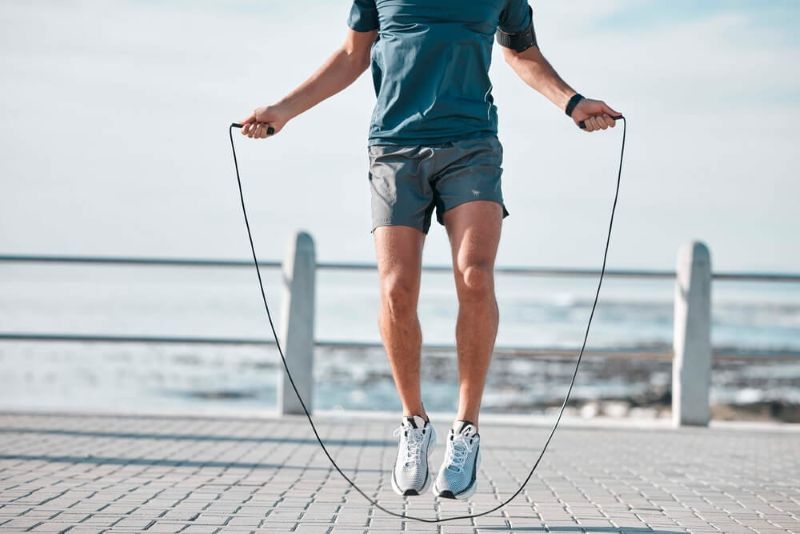
Jump rope has a funny reputation. People picture playgrounds, boxing gyms, or that one fitness phase they tried for three days. But it’s still one of the simplest, most effective ways to train the heart and lungs while also sharpening coordination.
It’s also brutally honest. If timing is off, the rope tells the truth. If posture collapses, the rope snags. Annoying? A little. Useful? Definitely.
A lot of routines are overdesigned. Ten apps, twelve metrics, a spreadsheet for “Zone 2.” Jump rope doesn’t care. You pick it up, you move, you get better. That’s the charm.
Before getting fancy, a few basics make everything feel smoother.
Start with the right rope length. A quick check: step on the middle of the rope and pull the handles up. The tops of the handles should land somewhere around the chest or armpits for most beginners. Too long makes sloppy loops. Too short turns it into a trip hazard.
Footwear matters, too. A supportive sneaker helps, especially on harder floors. And the surface? Try rubber gym flooring, a mat, or wood. Concrete is doable, but it’s not exactly kind.
Now the movement: jump low. Really low. The rope only needs a little clearance, not a dramatic leap. Think “quiet feet,” like someone sleeping in the next room.
This is where how to jump rope becomes less mysterious. It’s not about big jumps. It’s about rhythm.
There’s a reason athletes keep jump rope in their training. It hits multiple systems at once.
Cardio and conditioning improve fast. Legs and calves get stronger. Ankles get springier. Coordination tightens up. Even posture can improve because the movement rewards a tall, stacked position.
And the mental side is underrated. Jump rope forces focus. It’s hard to spiral into random thoughts when the rope is whipping around your feet.
For people who want a quick win, jump rope benefits show up early. The first week might feel messy, but by week two, the body starts to “get it.” Timing improves. Breathing steadies. The rope stops feeling like an enemy.
Some beginner mistakes are almost universal.
Also, people often start with too much volume. They go from zero to “let’s do 20 minutes.” The calves revolt. Shins complain. Motivation disappears. Classic.
A smarter approach is short sessions, repeated often. Five to ten minutes is enough when starting.
That’s the best mindset for jump rope for beginners. Keep it small. Keep it consistent. Let progress sneak up.
A simple start looks like this:
Day 1 to Day 3:
Do 6 to 8 rounds of 20 seconds jumping, 40 seconds rest.
That’s it. Stop while it still feels doable.
Day 4 to Day 7:
Bump it to 8 to 10 rounds of 20 seconds on, 40 seconds off.
If calves are sore, take a rest day and walk instead.
Week 2:
Try 30 seconds on, 30 seconds off. 10 rounds.
This approach builds tolerance without wrecking the legs. It also keeps the practice frequent, which is what improves timing.
And yes, failing is part of it. The rope catches. The rhythm breaks. Reset. Smile. Continue.
If someone wants quick improvement, these skills help the most.
Basic Bounce
Both feet, small jumps, wrists doing the work. It’s the foundation.
Alternate Foot Step
Like a light jog in place. This reduces calf fatigue and makes longer sets easier.
Boxer Step
Shift weight side to side, one foot slightly in front. It feels smoother and more athletic, and it’s easier on the lower legs.
Once these are solid, everything else becomes more accessible.
These are also the most useful jump rope exercises because they transfer into longer workouts and higher intensity intervals without wrecking form.
Do Check Out: Top 10 Creatine Rich Foods Every Man Should Add to His Diet
Here’s a beginner-friendly structure that doesn’t require any tricks.
Warm-Up (3 Minutes)
March in place, ankle circles, calf raises, and a few practice swings without jumping.
Main Set (12 Minutes)
Repeat that cycle 6 times.
Cool Down (3 Minutes)
Walk slowly, then stretch calves and quads lightly.
This format keeps intensity controlled and gives the legs time to recover. Over time, rest shrinks, work increases, and the body adapts.
When done with purpose, a jump rope cardio workout can feel like a clean, efficient training session. No fluff.
Progress comes from repetition, but smart repetition.
Use a timer and chase consistency, not perfection. Aim for fewer stops over time. Try to keep shoulders relaxed. Keep elbows close to the body. Let wrists do the spinning.
A simple challenge helps, too: pick one small focus per session.
This is also where people see why a jump rope workout is a skill sport, not just cardio. It’s movement practice. That’s why it sticks.
If shins start hurting, reduce volume and check form. Swap hard ground for a mat. Add walking or cycling for a few days. Many “jump rope injuries” are really “too much, too soon.”
Once the basics feel decent, add small variety to keep it engaging.
Try this intermediate set:
Repeat 4 rounds
This keeps the heart rate moving while the footwork changes enough to avoid boredom.
And yes, this is another place the jump rope benefits show up, because the body learns to handle different tempos and patterns, not just one repetitive jump.
Some people say they can’t do it. Usually, they can, but they’re starting too fast and expecting instant rhythm.
Two quick fixes:
It’s boring for about five minutes. Then it clicks. Most skills do.
That’s the real secret of how to jump rope. Slow down enough for the nervous system to learn.
Read More: High-Intensity Interval Training (HIIT) Workouts for Busy Me
Improvement isn’t only about tricks.
Look for:
Those are real markers. And they show up sooner than most people expect.
For beginners, 3 to 4 days per week works well. Short sessions build skill and conditioning without overloading calves and shins.
It depends. Low, soft jumps on a forgiving surface can be okay, but anyone with knee pain should start gently and consider checking with a clinician if pain persists.
A solid session can be 10 to 20 minutes, including rest intervals. Beginners should start with 5 to 10 minutes and build up gradually.
This content was created by AI